
How the retatrutide calculator works
The calculator runs three divisions, the same ones a laboratory writes on the label of a freshly mixed vial. None of them depends on the compound: they hold for any lyophilised peptide.
- Concentration (mg/mL) = milligrams in the vial / millilitres of water. 10 mg in 2 mL is 5 mg/mL.
- Volume (mL) = the mass you want / the concentration. 2 mg at 5 mg/mL is 0.4 mL.
- Units = millilitres x 100 on a U-100 syringe. 0.4 mL is 40 units.
The water adds nothing and removes nothing. A 10 mg vial holds 10 mg whether it is mixed with 1 mL or 3 mL; only the volume that carries each milligram changes. Why the diluent matters, how to add it without denaturing the peptide and how long a mixed vial keeps are covered in the retatrutide reconstitution guide.
Reading a U-100 syringe
"U-100" means the barrel is graduated for 100 units per millilitre, so each unit is 0.01 mL. A 1 mL syringe reads up to 100 units, a 0.5 mL syringe up to 50 and a 0.3 mL syringe up to 30. When a calculation returns more units than the barrel holds, the syringe is too small for that volume at that concentration.
That is why the choice of water volume is practical, not chemical. Less water makes a stronger solution and smaller volumes; more water makes a weaker solution and larger, easier to read volumes. For the water itself, OXpeptides bacteriostatic water (sterile water with 0.9% benzyl alcohol) is listed next to the research vials.
What the trial participants received
The published trials never used a calculator. In the phase 2 obesity trial (NEJM 2023, 338 adults), participants received 1, 4, 8 or 12 mg once weekly for 48 weeks; most arms started at 2 mg and stepped up every 4 weeks. The trial registry notes that escalation was done by increasing the injected volume of a fixed-concentration study drug prepared by the sponsor. The phase 3 TRIUMPH trials use 4, 9 and 12 mg once weekly.
These figures describe what happened in a trial, not an amount for anyone to take. Retatrutide is not approved by the FDA or the EMA; research vials are sold for research use only. The week by week ladders are in the retatrutide dosing schedule, and what the participants reported at each dose is on retatrutide side effects by dose.
Four calculation errors
Units are not milligrams. "20 units" is 0.2 mL. It holds 2 mg at 10 mg/mL and 1 mg at 5 mg/mL. Always read units together with the concentration written on the vial.
A vial label is not a dose. "10 mg" is the total powder in the vial. A 12 mg amount does not fit in one 10 mg vial at any water volume.
The wrong syringe scale. The units above assume U-100. A U-40 barrel reads 40 units per mL, and the same volume gives a different number.
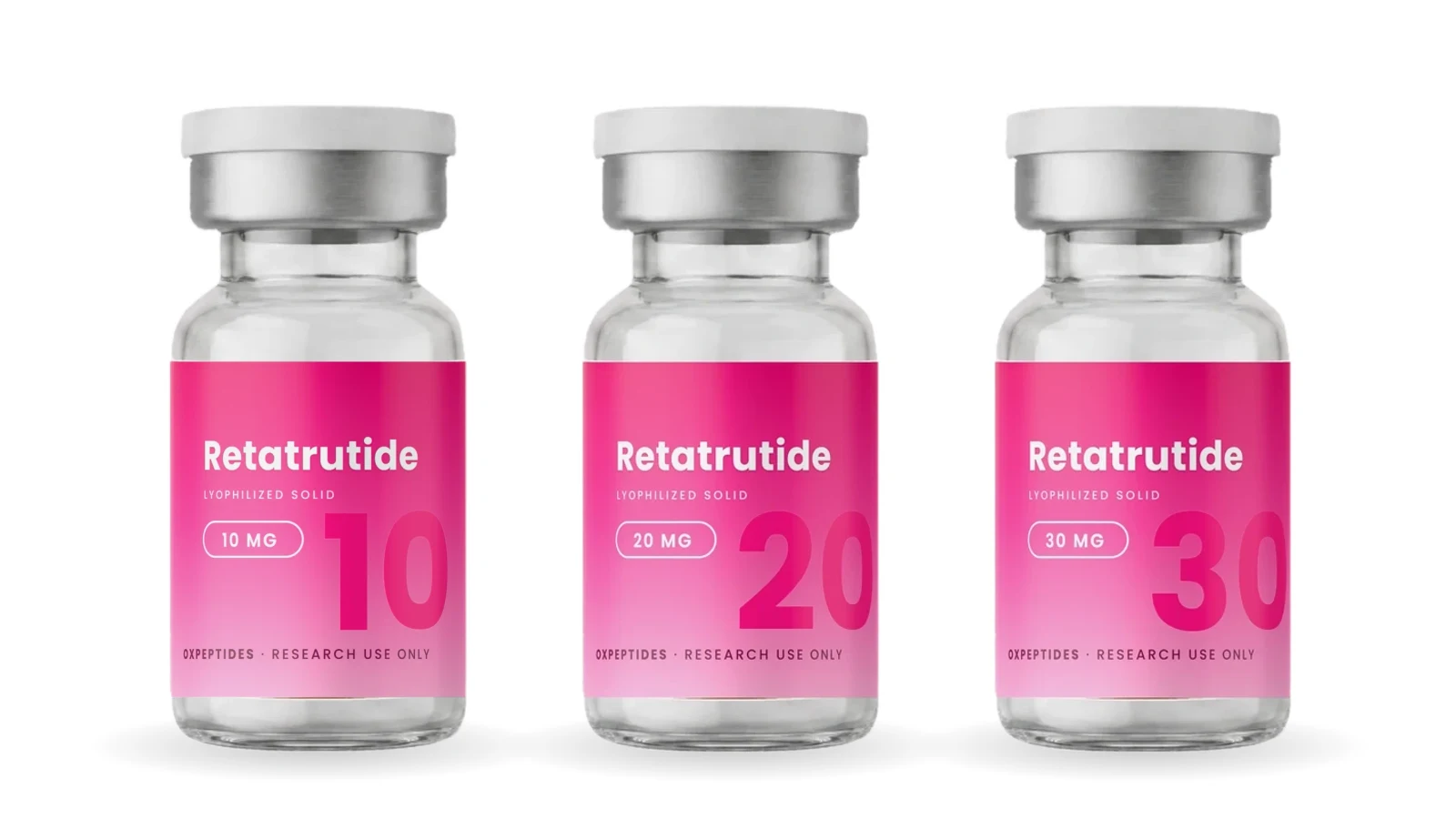
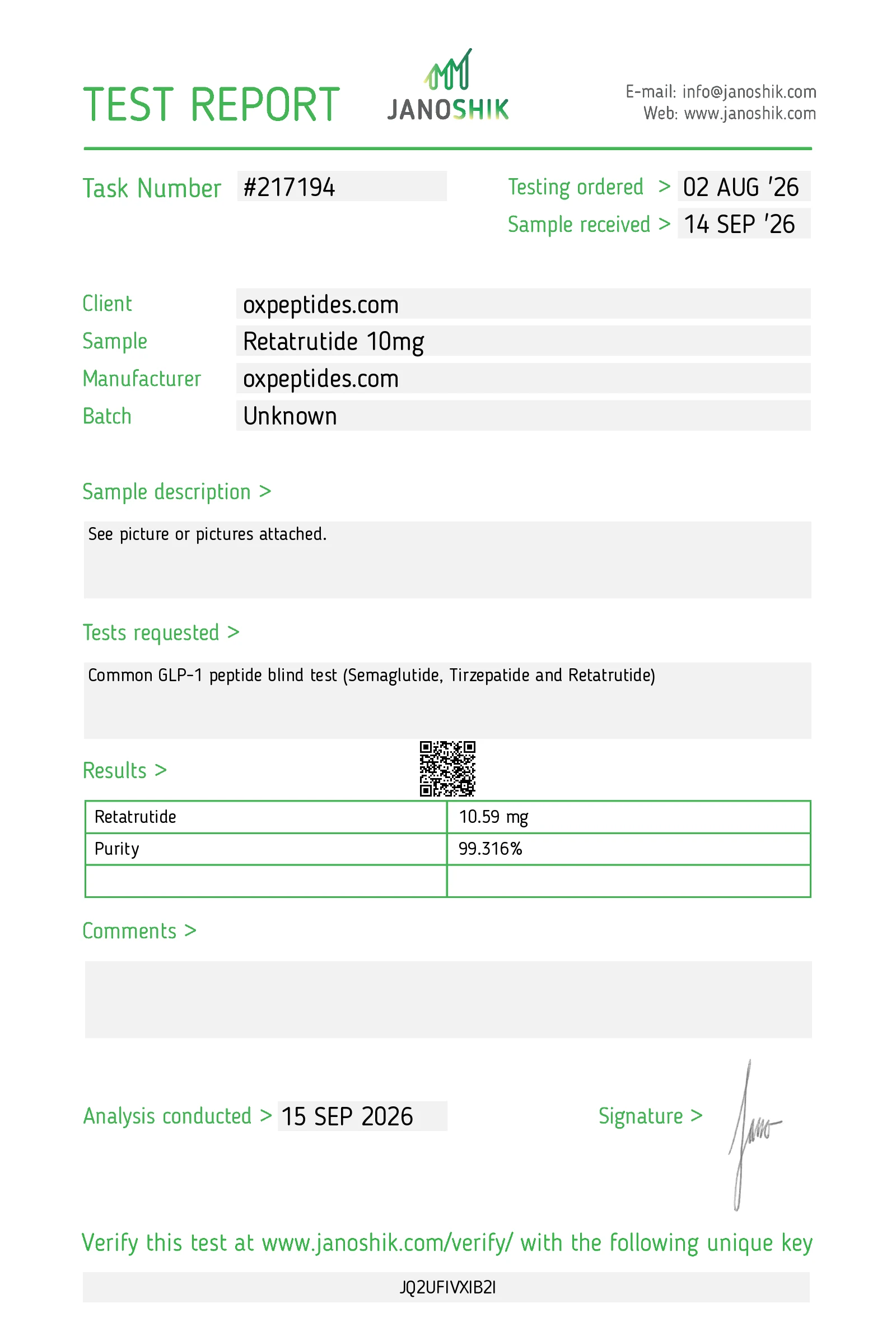
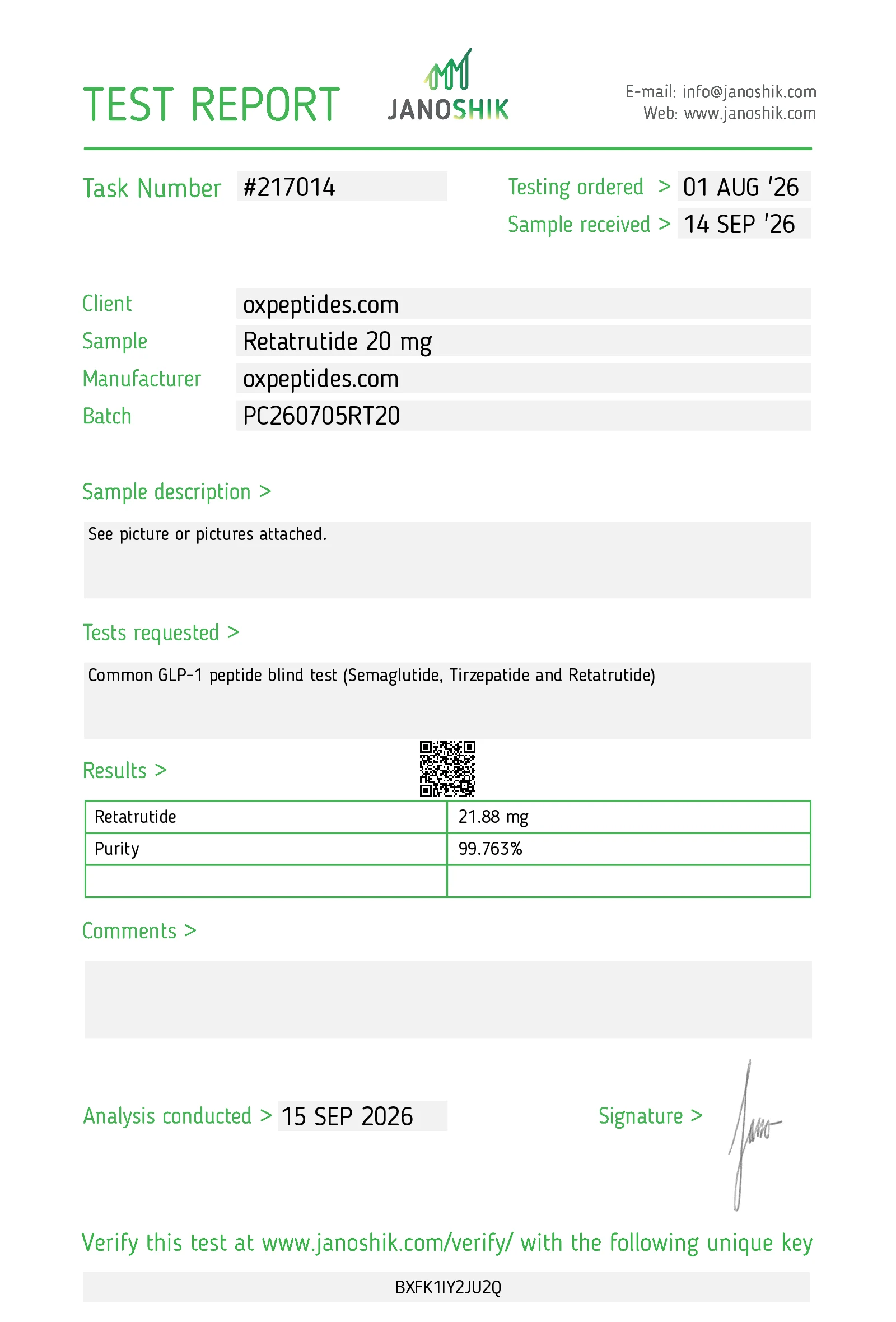
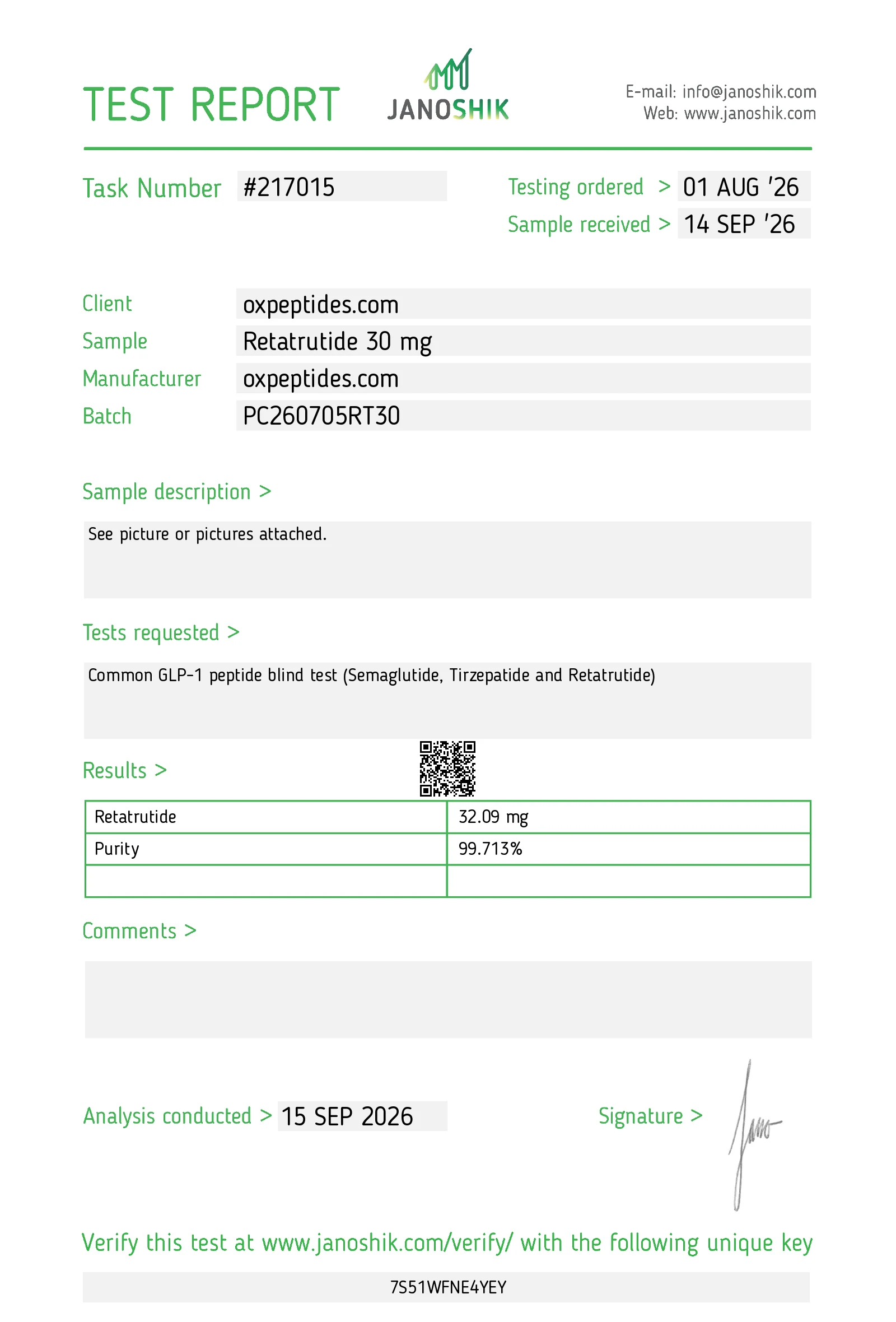
Trusting the label. Every figure assumes the vial really holds what it says. Only a batch certificate of analysis (HPLC purity and mass) checks that. How the vendors of research vials compare on lot numbers and certificates is laid out on where to buy retatrutide, 13 vendors compared.
Asked and answered
How much BAC water for a 10 mg vial?
Any volume dissolves the powder; the volume only sets the concentration. 1 mL gives 10 mg/mL, 2 mL gives 5 mg/mL and 3 mL gives 3.33 mg/mL. Most reconstitution guides use 2 mL for a 10 mg vial because 5 mg/mL puts 1 mg at 20 units on a U-100 syringe, an easy number to read.
How to reconstitute 10 mg of peptide?
Add a measured volume of bacteriostatic water, let it run slowly down the inside wall of the vial rather than onto the powder, and swirl gently without shaking until the solution is clear. Write the concentration on the vial: 10 mg in 2 mL is 5 mg/mL.
How much bacteriostatic water to mix with peptides?
There is no single volume. Divide the milligrams in the vial by the concentration you want to work with: for 5 mg/mL, a 5 mg vial takes 1 mL, a 10 mg vial 2 mL and a 20 mg vial 4 mL. Choose a volume that keeps the amounts you measure within the graduations of your syringe.
What are the dosages for retatrutide?
Retatrutide has no approved dosage: it is not approved by the FDA or the EMA. In the phase 2 obesity trial (NEJM 2023), participants received 1, 4, 8 or 12 mg once weekly for 48 weeks, most starting at 2 mg; the phase 3 TRIUMPH trials use 4, 9 and 12 mg.
How many units is 2 mg of retatrutide?
It depends on the concentration. In a 10 mg vial with 2 mL of water (5 mg/mL), 2 mg is 0.4 mL, which is 40 units on a U-100 syringe. With 1 mL of water (10 mg/mL) it is 20 units; with 3 mL (3.33 mg/mL) it is 60 units.